
What a Battery Does
A home battery stores electricity for later. Paired with solar, it fills a few distinct jobs:
- Backup during outages. When the grid goes down, a charged battery keeps selected circuits running — lights, fridge, Wi-Fi, medical devices. In a state where outages make the news, this is the reason most buyers cite first.
- Self-consumption. Instead of exporting midday surplus to the grid (possibly at low buyback rates), you store it and use it yourself in the evening — when you'd otherwise be buying full-price power.
- Time-of-use shifting. On rate plans with expensive afternoon peak pricing, the battery can discharge during the peak and recharge from your panels, shaving the priciest hours off your bill.
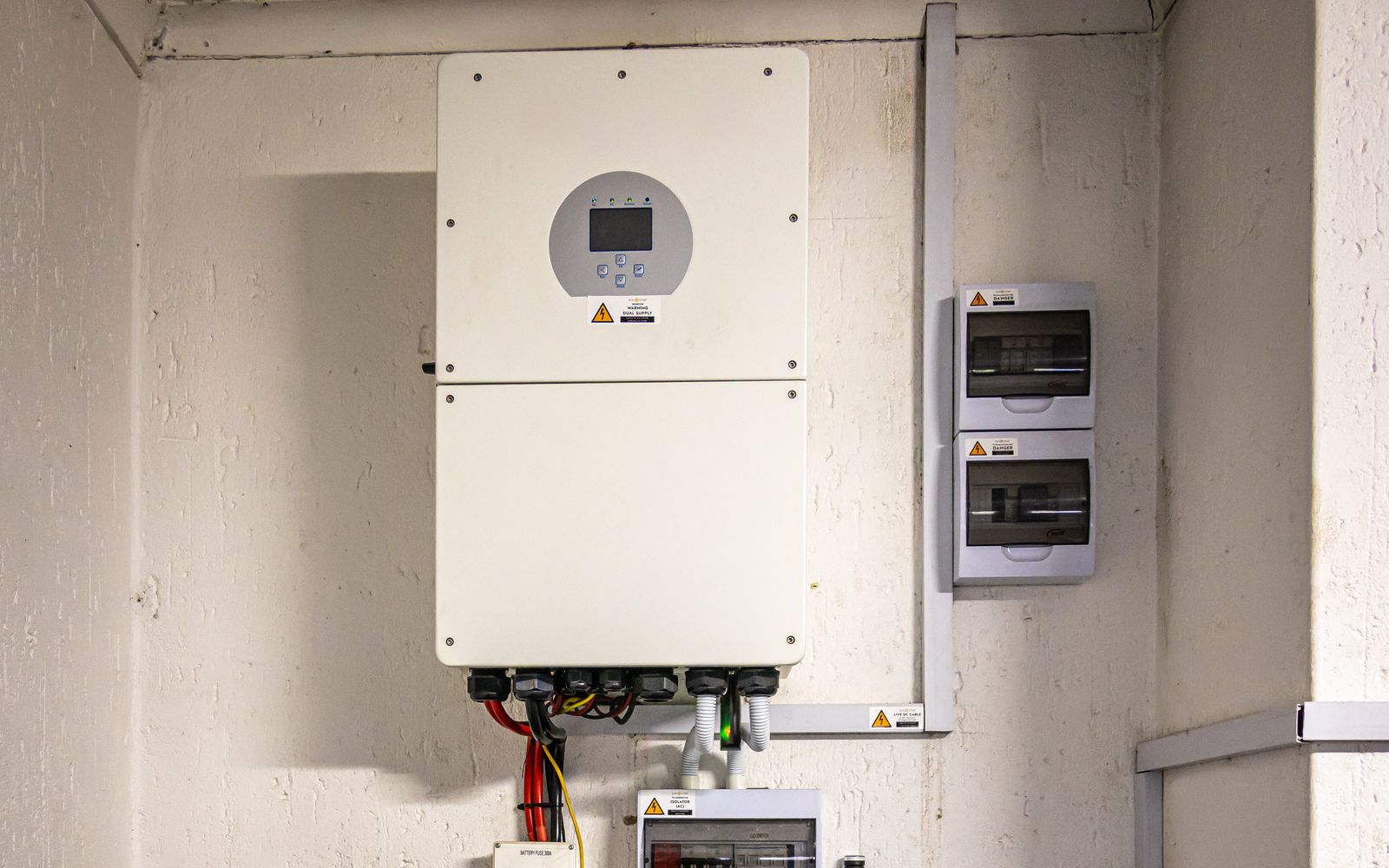
Grid-Tied Systems and Outages
This surprises many homeowners: a standard grid-tied solar system without a battery shuts down during a grid outage. That's a safety requirement — the system must not send power back into lines that utility crews are working on. Your panels alone won't keep the lights on.
With a battery and the right isolation equipment, the system can disconnect from the grid ("island" your home) and keep running your backed-up circuits. When you size a battery, this is the question that matters: what do you need to keep running, and for how long?
Sizing Considerations
Batteries are sized around your priorities, not a rule of thumb:
- Critical loads. Most homeowners back up essentials — refrigeration, lighting, internet, a medical device — rather than the entire house. Whole-home backup is possible but needs substantially more capacity.
- Overnight needs. After sunset, the battery is all you have until morning. Think about what runs overnight in your home, especially in summer (fans, AC set to a moderate temp) and winter.
- Recharge reality. A battery only helps tomorrow if today's sun refills it. Your array size and the season both limit how much gets stored.
- Modularity. Many battery systems allow adding capacity later. Starting with essentials and expanding is a legitimate strategy — ask whether the platform you choose supports it.
The Chemistry Basics
Most home batteries today use lithium-ion chemistries — the same broad family as in phones and EVs, engineered for stationary storage. There are sub-types with different trade-offs around energy density, cycle life, and thermal behavior. Below are the battery brands Bright Solar is certified to install.
What batteries won't do: run your whole house indefinitely, replace a generator for multi-day outages by themselves, or pay for themselves on backup value alone. They're one of the largest cost adders in a solar project (see cost factors) — size them to your actual needs, not your fears.
The Batteries We Offer
Bright Solar is a certified installer for battery storage from these brands. Which one fits your home depends on your loads, your inverter setup, and your backup goals — we'll recommend the right match during your quote.





- Tesla — Powerwall home battery for backup power and everyday energy use.
- Enphase — IQ battery storage that pairs with Enphase microinverter systems.
- Lion Energy — battery storage for home backup and off-grid needs.
- Fox ESS — battery storage and inverter options for home solar systems.
- SolarEdge — battery and inverter systems designed to work together.
- Duracell — home battery systems for backup and daily cycling.
Is a Battery Worth It for You?
A battery makes the most sense when one or more of these is true: you experience outages and need essential backup; your buyback plan pays little for exported power, making self-consumption valuable; you're on a time-of-use plan with expensive peaks; or you simply want the resilience. If none of those apply, the money may work harder in a larger array instead. A personalized quote can model both options side by side.