
what it is
What "off-Grid" Really Means.
An off-grid system produces and stores all of the electricity a property uses — there's no utility connection to fall back on.
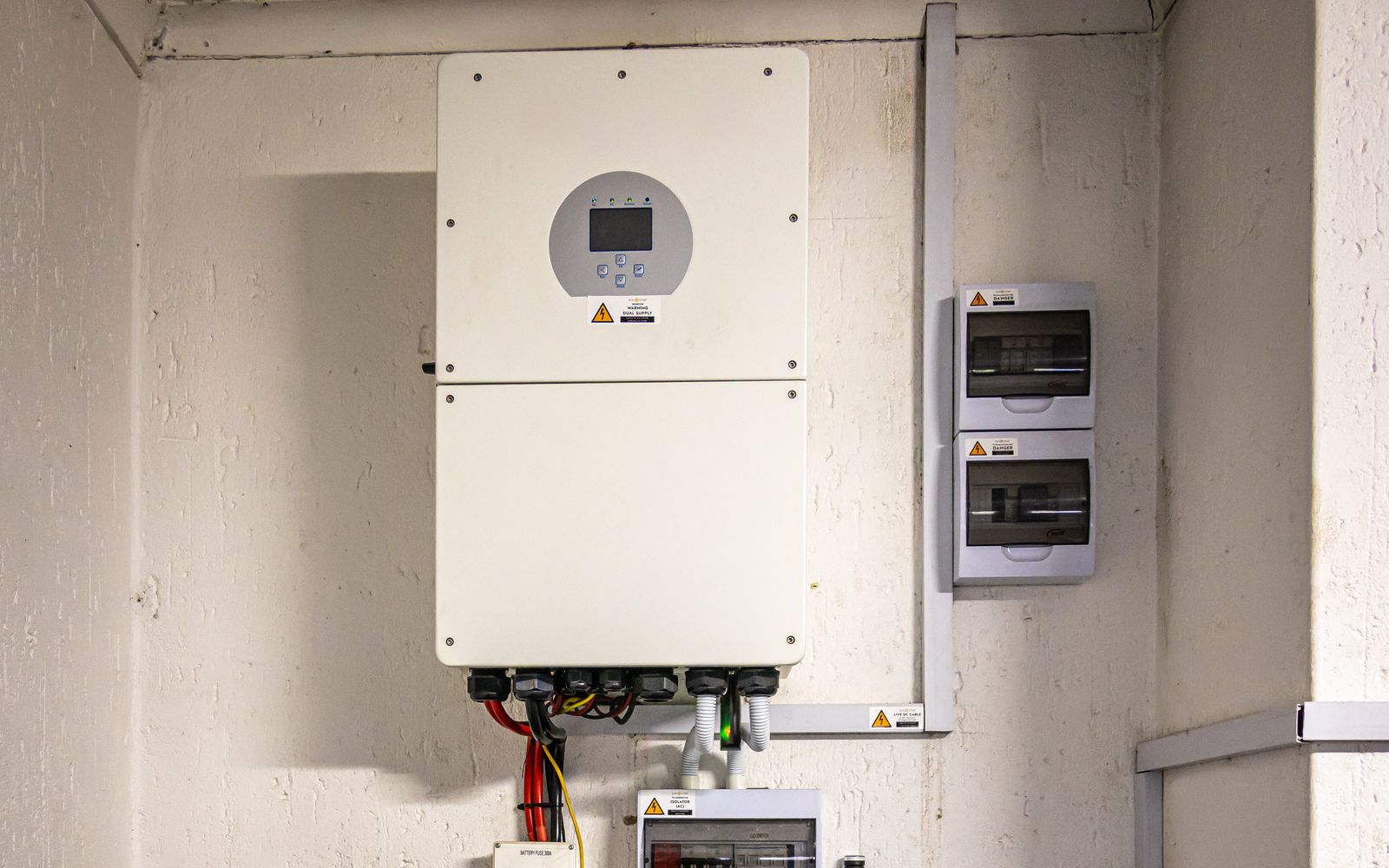
The three pieces work together. Solar panels generate electricity during the day. Battery storage holds the surplus for evenings, cloudy stretches, and early mornings. Backup generation — typically a fuel generator — covers the gaps when the sun and batteries aren't enough. Together they form a self-contained power system designed around how the property actually uses energy.
Who It's For.
Off-grid solar makes sense where running utility power to a property is expensive, impractical, or simply not what you want. Common situations include:
- Rural properties where the nearest utility connection is far away and extending lines is cost-prohibitive.
- New builds beyond the grid — if you're building where no service exists yet, an off-grid system can be designed in from the start.
- Independence-minded owners who want full control over their power, even where grid service is available.
We're careful with expectations here: off-grid living requires real planning, and it's not the right choice for everyone. That's exactly why the design conversation matters.
Sizing Considerations.
Unlike a grid-tied system, an off-grid system has no utility to absorb the peaks and valleys — so sizing it right is everything:
- Full energy audit. Every load on the property matters, including the big ones: well pumps, HVAC, water heaters, and workshops.
- Storage depth. Batteries are sized for how many days of low sun you want to ride through, not just overnight use.
- Backup coverage. The generator side is sized to handle your essential loads and recharge batteries when needed.
- Growth room. If the property may grow — more buildings, more equipment — the system should be designed with that in mind.
Maintenance Realities.
Honest version: an off-grid system asks more of you than a grid-tied one.
- Monitoring is daily life. You keep an eye on battery levels and production, especially in winter and during cloudy stretches.
- Batteries are the wear item. They're the component most likely to need attention or replacement over the life of the system.
- Generators need care. Backup generation means fuel, filters, oil changes, and periodic test runs — like any engine.
- Usage discipline helps. Off-grid households learn to time heavy loads for sunny hours. It's a rhythm, and most people get comfortable with it.
If that sounds like a fair trade for independence, off-grid may be a great fit. If it sounds like a chore, a grid-tied system with batteries might suit you better.